Angle: Educational, practical guidance on assessing survivor income risk and building household-level protections without promoting specific financial products.
Estimate Survivor Income Needs
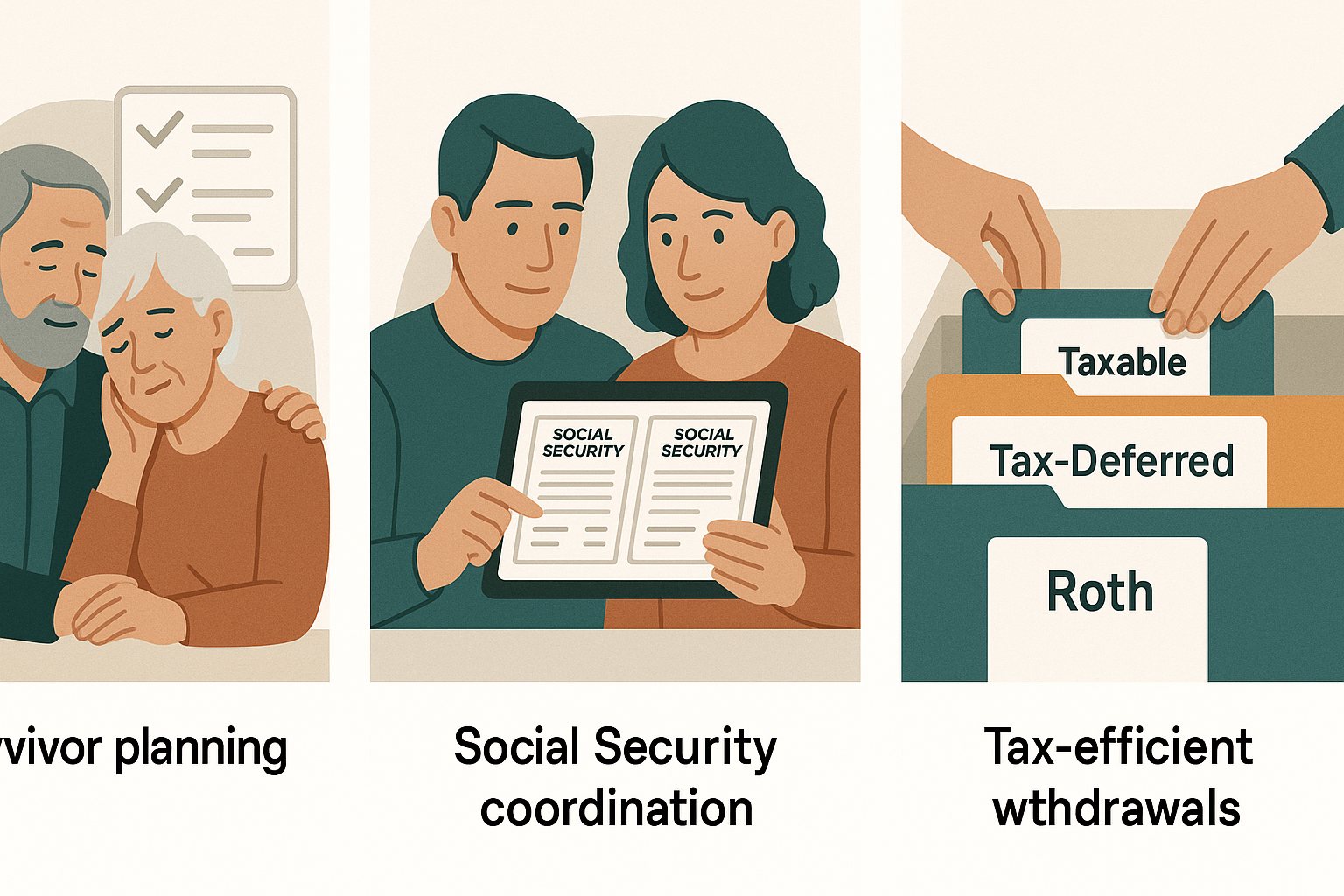
Start by identifying essential monthly expenses that must be covered if one spouse dies (housing, healthcare, debt payments, and basic living costs). Compare those needs to projected survivor income sources, such as survivor Social Security, pensions, and guaranteed income, to quantify a potential gap.
Common Sources of Survivor Income and Their Limitations
Review typical sources — Social Security survivor benefits, spouse’s retirement accounts, pension survivor options, and personal savings — and understand timing, potential reductions, and how each source may be taxed. The goal is to map timing and reliability rather than to endorse specific options.
Practical Strategies to Reduce Survivor Risk
Consider approaches like maintaining an emergency income buffer, converting a portion of assets to reliable income before retirement, or structuring withdrawals to preserve a survivor cushion. Also discuss documenting beneficiary choices and communicating plans so the surviving spouse can access funds and benefits promptly.
Related Articles
Continue Exploring This Topic
This article is part of a broader educational content package on Household Retirement Income Planning for Couples.