In This Series
In This Guide
Key Takeaways
- Gross rent is the total amount collected from tenants before any expenses are deducted.
- Net income accounts for recurring operational expenses like mortgage, taxes, and insurance.
- True cash flow is what's left after *all* expenses, including irregular ones like repairs and vacancies, are factored in.
- Only true cash flow represents the spendable income a rental property provides for retirement.
- Miscalculating cash flow can lead to shortfalls and stress in a retirement income plan.
Angle: Differentiates clearly between gross rental income, net income, and actual usable cash flow, emphasizing why the latter is the only metric that truly matters for retirement income planning.
The Three Layers of Rental Profitability
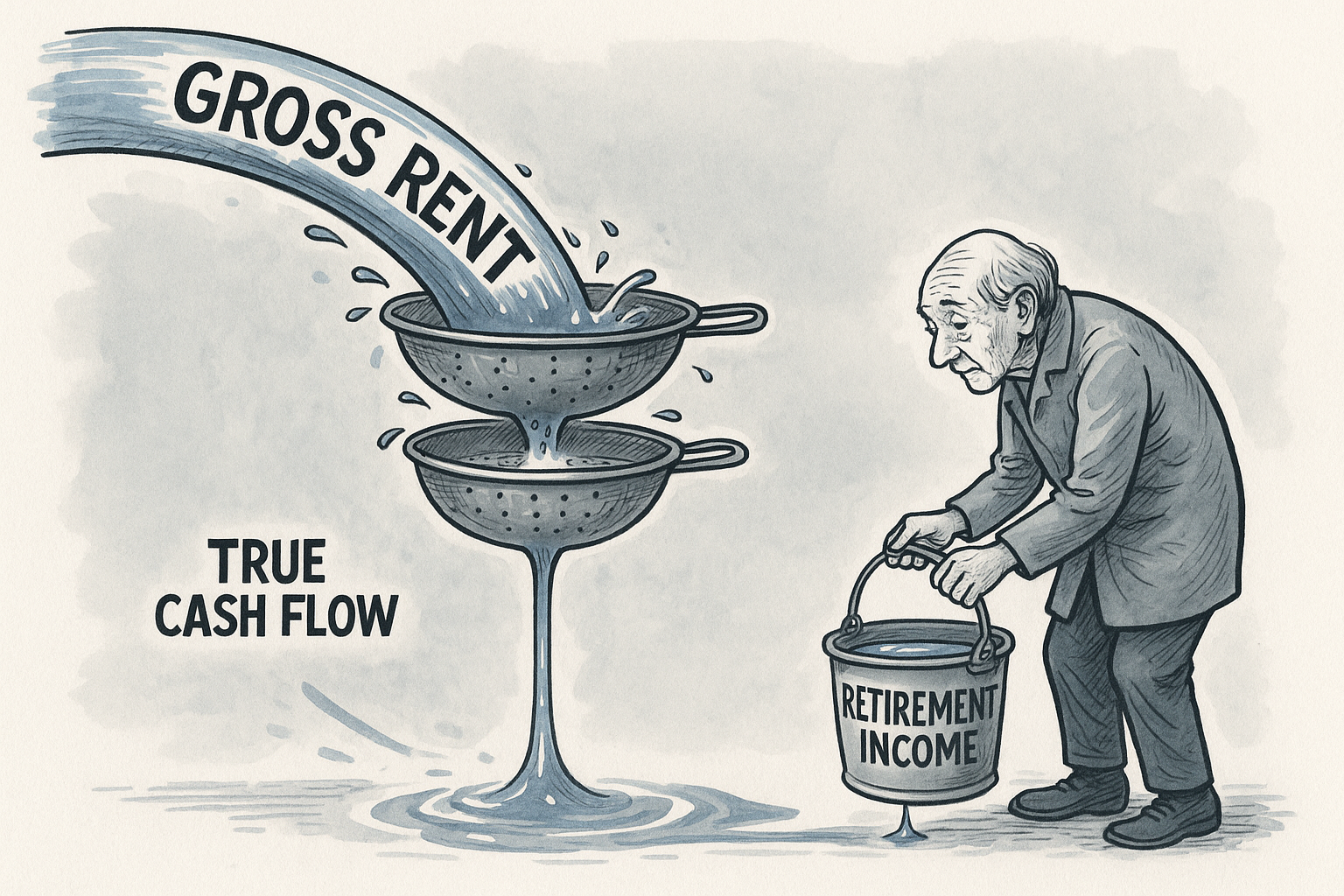
Understanding your rental property's true contribution to your retirement income involves peeling back three layers of profitability. The first is **Gross Rent**, which is simply the total amount of rent collected from your tenants. This is the easiest number to see, but it's also the most misleading. The second layer is **Net Income**, which comes after deducting predictable, recurring expenses like your mortgage payment (principal and interest), property taxes, and insurance premiums. This figure gives you a clearer picture but still doesn’t represent what you can actually spend. The final, and most crucial, layer is **True Usable Cash Flow**. This is what's left after *all* expenses—both recurring and the often-overlooked irregular ones—have been accounted for. This is the only figure that accurately reflects what your rental property is truly paying you.
Why True Usable Cash Flow is the Retirement Metric
For someone in retirement, the primary concern shifts to having predictable, spendable income to cover living expenses. This is why true usable cash flow is the only metric that truly matters. It considers everything from routine maintenance to major capital expenditures (like replacing a roof or HVAC system), potential vacancy periods, and even the cost of property management or your own time. If you only look at gross rent or even net income, you're likely overestimating what your property can provide, leading to a gap in your retirement income plan. For some households, this means realizing their rental income vs. retirement income doesn't align, and the property isn't providing the stability they need.
Closing the Gap: From Illusion to Reality
Most people don’t realize how quickly that $2,000 monthly rent check can dwindle when all these factors are considered. For example, after mortgage, taxes, insurance, and setting aside funds for vacancies and repairs, that $2,000 might realistically become only $300-$500 in true usable cash flow. This is where many plans begin to break down, as the expected income simply isn't there. Recognizing this difference allows you to make more informed decisions about your rental property's role in your overall retirement strategy. It helps you assess if your property is truly a reliable income producer or if its equity could be repositioned into a more predictable and passive income stream designed for your retirement years.
Related Articles
- Is Your Rental Property Not Profitable? Understanding True Retirement Income
- Why Some Rental Properties Never Produce Real Profit for Retirement
- Should You Keep or Sell Your Rental Property Before Retirement?
- The Hidden Costs of Being a Landlord: Beyond the Mortgage Payment
- What to Do If Your Rental Property Isn’t Performing for Retirement
- How to Turn Your Assets Into a Reliable Retirement Paycheck
About the Author
John P. Sansaricq is a licensed insurance professional focused on retirement income planning, life insurance strategies, and educational resources for pre-retirees and retirees.
He helps individuals and families explore ways to protect savings, manage risk, and prepare for more informed retirement planning conversations.
Plan Your Retirement Income With Confidence
If this topic raised questions about retirement income, taxes, market risk, or long-term planning, the next step is to review a simple educational guide and prepare for a strategy conversation.
Download the free guide: Beyond the Rent Check: Uncovering Your Rental Property's True Retirement Income Potential