In This Series
In This Guide
Key Takeaways
- RMDs convert tax-deferred savings into taxable income that must be planned for in advance.
- Using Roth conversions and qualified charitable distributions can reduce the taxable RMD base.
- Consolidating accounts and maintaining updated projections smoothes RMD impact over time.
Angle: Help readers anticipate and manage RMD timing and size, using Roth conversions, qualified charitable distributions, and account consolidation as tools.
What Triggers Required Minimum Distributions
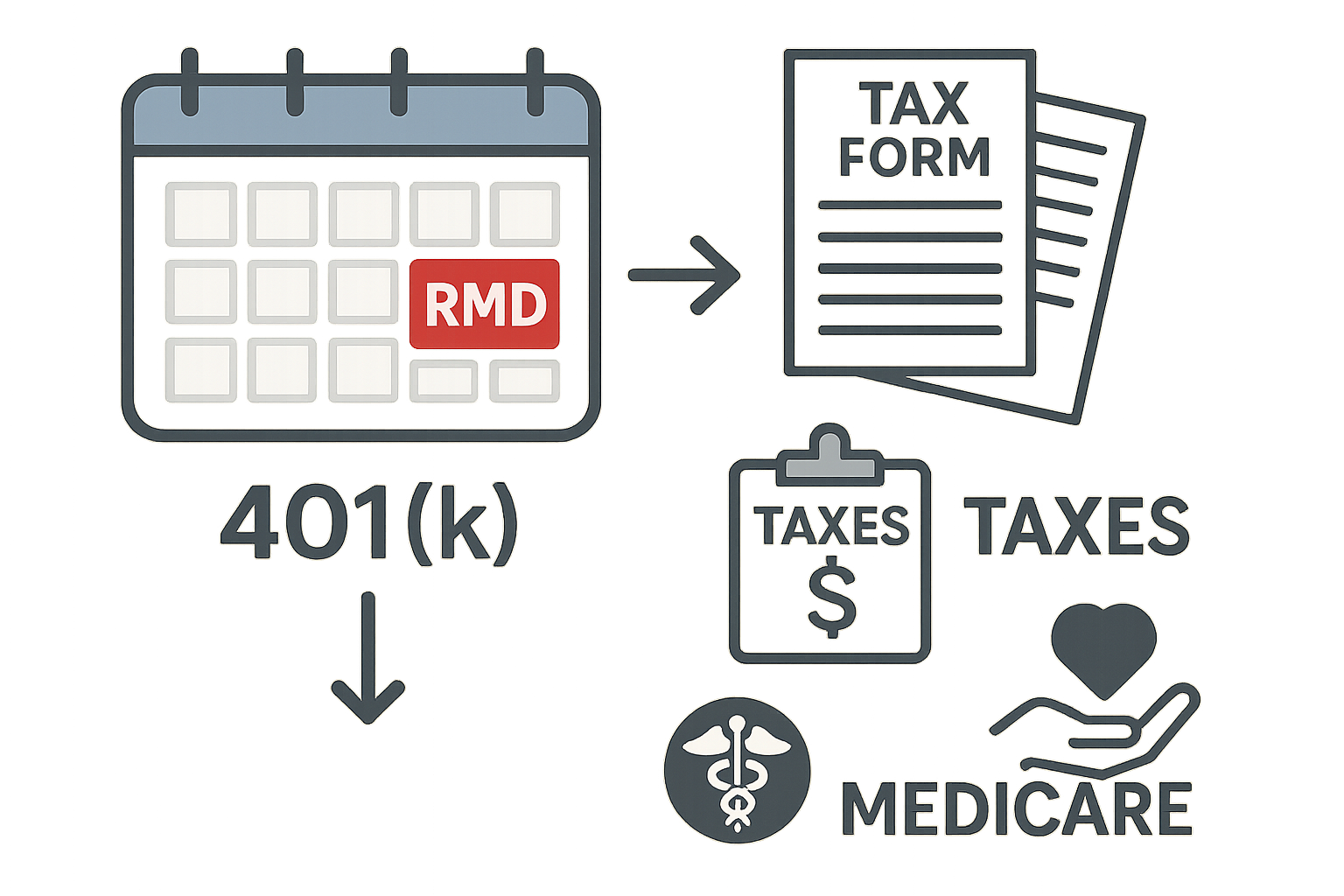
Required minimum distributions are the minimum amounts that must be withdrawn each year from certain tax-deferred retirement accounts once a participant reaches specified ages or other triggering events. RMD calculations depend on the account balance and life expectancy tables, and they are recalculated annually. The taxable nature of RMDs means that they directly affect the retiree’s income tax return and can influence other retirement benefits that use modified adjusted gross income as a base.
Strategies to Manage RMD Impact
Strategies include executing partial Roth conversions before RMDs begin to reduce the tax-deferred balance, consolidating accounts to simplify planning, and using qualified charitable distributions from IRAs for those who are eligible to support philanthropic goals without increasing taxable income. Each strategy should be modeled against projected RMDs to assess long-term tax effects and ensure compliance with distribution rules.
Year-by-Year Planning and Compliance
Successful RMD planning treats required distributions as an annual budgeting event. Retirees should update projections for account growth, expected distributions, and life changes each year to minimize surprises. Recording distribution dates, understanding aggregation rules for different account types, and coordinating with tax preparers helps ensure compliance and reduces the likelihood of costly errors or penalties.
Related Articles
- The 401(k) Tax Trap Most Retirees Don’t See Coming — What It Is and How to Respond
- Roth Conversions Without the Sticker Shock
- Withdrawal Sequencing to Minimize Taxes and Medicare Premium Hits
- 7 Retirement Risks That Could Derail Your Retirement Plan
- Implementing IUL Strategies for Retirement Income: Design, Risks, and Steps
- IULs vs Fixed Indexed Annuities for retirement income: How to Compare the Two
About the Author
John P. Sansaricq is a licensed insurance professional focused on retirement income planning, life insurance strategies, and educational resources for pre-retirees and retirees.
He helps individuals and families explore ways to protect savings, manage risk, and prepare for more informed retirement planning conversations.
Plan Your Retirement Income With Confidence
If this topic raised questions about retirement income, taxes, market risk, or long-term planning, the next step is to review a simple educational guide and prepare for a strategy conversation.
Download the free guide: The 401(k) Tax Trap Most Retirees Don’t See Coming: A Practical Guide